Keep water moving away from your lighting system without trapping moisture behind it. Learn how installers handle sealants, mounting holes, flashing, freeze-thaw movement, and warranty requirements.
At a wet soffit return, weatherproofing permanent outdoor lighting starts with finding the water path, not adding more caulk. A track can look tidy while trapping runoff against the fascia board. Once temperatures drop, that trapped water can freeze and push joints apart.
Permanent lights mount along soffit, fascia, and rooflines for year-round, app-driven scenes. The lights, mounting hardware, wiring, and building surface all need to work together.
Plan Weatherproofing Permanent Outdoor Lighting Around Drainage
Start above the proposed track. Check roof pitch, gutter overflow, flashing, and the existing drip edge before covering anything. Stained wood or peeling paint needs investigation first.
Keep tracks clear of drip-edge outlets and soffit ventilation. Likewise, don't seal J-channel drainage openings or create a dam at a gable corner. Weatherproofing permanent outdoor lighting should preserve the home's drainage system, not replace it.
In Seattle, prolonged rain makes drying paths especially useful. Meanwhile, Minneapolis installations must also allow for freeze-thaw movement, and Phoenix rooflines face substantial heat expansion.
Choose Sealant by Surface and Joint
No sealant suits every painted board, plastic jacket, and aluminum channel. Check compatibility, outdoor exposure limits, movement rating, and application temperature. Follow both the lighting instructions and the sealant's technical sheet.
Compare the Common Choices
- Exterior neutral-cure silicone: Handles weather and movement well when approved for the surfaces. However, many products cannot be painted, and residue complicates future repairs.
- Exterior polyurethane: Often suits painted construction joints and may accept paint. Cure conditions, UV exposure, and compatibility with plastics still matter.
- Hybrid polymer sealant: Can offer useful adhesion and paintability. Product formulas differ, so verify the actual label rather than trusting the category.
- Approved gasket or cable gland: Often the better choice at an enclosure entry. Match cable diameter and enclosure requirements instead of substituting a blob of caulk.
For weatherproofing permanent outdoor lighting, avoid treating sealant as glue, flashing, and a connector cover all at once. Never fill factory connectors or housings unless the manufacturer explicitly permits that method.
Prep Beats a Bigger Bead
Remove loose paint, dirt, and failed sealant, then let the surface dry. Use primer and backer rod where the sealant instructions require them. A deep, three-sided bond can restrict movement and tear.
Ladder tip: Wipe the underside of the fascia before marking holes. Gutter residue often hides there, even when the visible face looks clean, and it can spoil adhesion.
Handle 8mm Mounting Holes and Penetrations Carefully
An 8mm mounting hole is not a universal requirement. It might be a clearance hole specified for one track, while another system needs a smaller pilot hole. Confirm the drawing before drilling; an oversized hole can weaken the attachment.
Likewise, 2.5 inch fastener spacing is not a default schedule. Use it only where the approved hardware instructions specify it. Fastener spacing, edge distance, substrate thickness, and wind exposure all affect the attachment.
Use a Penetration Checklist
- Confirm the route. Locate framing, wiring, plumbing, and the water-control layer before drilling.
- Choose sound backing. Thin soffit panels and rotten fascia aren't reliable structural support.
- Drill the specified size. Deburr metal and fit an approved bushing where cables cross sharp edges.
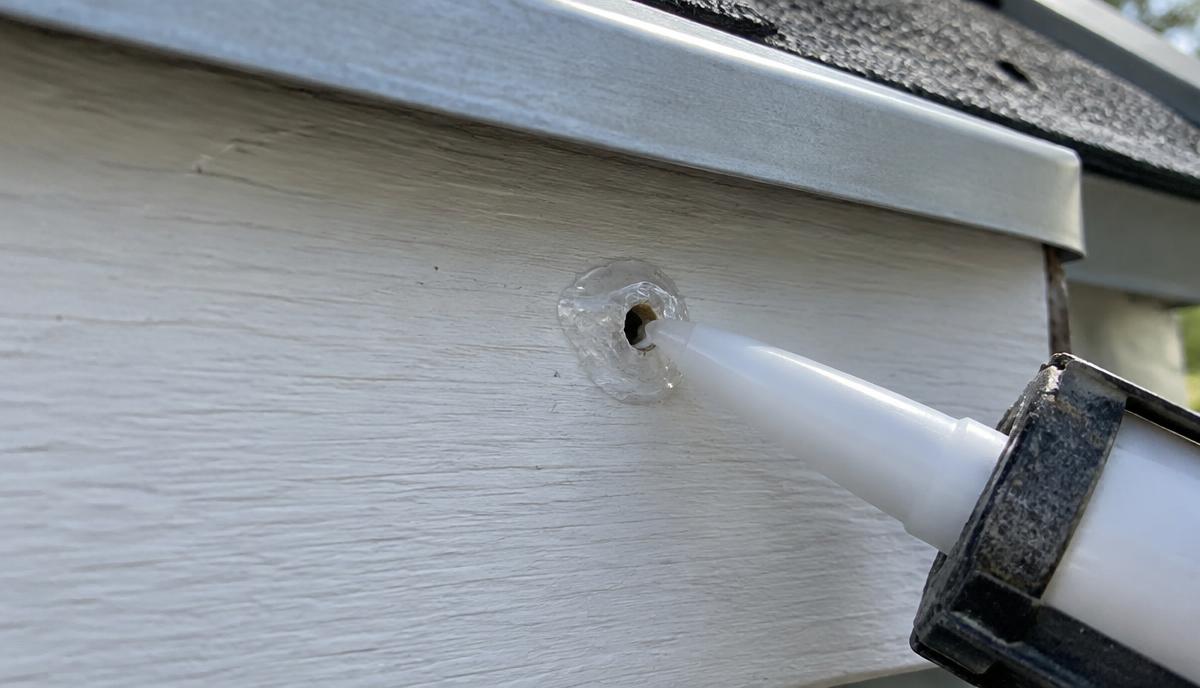
- Protect the opening. Use compatible flashing, a gasket, or an approved gland as the assembly requires. Surface caulk alone may not protect a wall penetration.
- Route water away. Where permitted, slope the entry outward and place a drip loop below it.
- Document the work. Photograph concealed details before fitting covers.
Ladder tip: Hold the track in position and check that its cover can still snap on beside gutters and corner trim. Discovering a blocked cover after fastening usually means extra holes.
Allow Movement Without Losing Support
Long tracks and cables change length with temperature. Follow the hardware maker's expansion gaps and fixing method; don't improvise oversized holes or leave ordinary screws loose.
A service loop provides slack for approved maintenance and movement. A drip loop directs water below an entry. One loop may serve both purposes, but only if its position and bend radius are suitable.
Good weatherproofing permanent outdoor lighting also means leaving intended weep paths open. Don't caulk the entire lower edge of a channel unless its instructions call for that detail.
Deliciosa Decor is LightPro Connect's affiliated hardware partner for mounting tracks and channels. Review mounting hardware options with your installer, including attachment, drainage, and expansion requirements.
Protect Power, Connectors, and Warranty Coverage
IP65 describes dust protection and resistance to water jets under specified tests. It does not mean equipment can sit underwater, and the rating may depend on fully assembled seals. The NEMA enclosure standard addresses separate enclosure classifications; don't assume direct equivalence.
Keep connections out of gutter discharge and standing water. Use the specified outdoor power supply, approved extensions, and GFCI protection where required. An electrician should handle new line-voltage work and confirm local requirements; the CPSC's GFCI guidance explains the shock protection involved.
Before weatherproofing permanent outdoor lighting, record model numbers and save installation instructions. Unapproved splices, drilled housings, or excessive low-voltage run length can affect performance and warranty eligibility. Product coverage and installer workmanship coverage are separate.
FAQs About Weatherproofing Permanent Outdoor Lighting
How Much Does Professional Installation Cost?
Typical projects can range from several hundred dollars for limited work to several thousand dollars or more for full rooflines. Height, access, electrical repairs, track length, and flashing details change the scope. Ask for itemized materials, labor, electrical work, and surface repairs so you can compare equivalent proposals.
Will Sealant Void My Lighting Warranty?
Not automatically, but an unapproved material or modification can affect a claim. Get written confirmation before coating connectors, drilling housings, or replacing factory seals. For weatherproofing permanent outdoor lighting, keep product instructions, receipts, and installation photos, plus written terms identifying who handles leaks, failed lights, and return visits.
How Long Can the Lighting Run Be?
There is no universal maximum low-voltage run length. Limits depend on the model, power supply, cable size, extensions, and controller. Follow the manufacturer's total-length and segment rules. If the roofline exceeds them, use an approved layout with additional power supplies or separate runs, not an improvised splice.
Will App Control Still Work With Protected Equipment?
Yes, if equipment stays within its installation and wireless requirements. Metal enclosures can weaken signals, so test connectivity before closing everything up. Keep controllers accessible and within their temperature limits. Weatherproofing permanent outdoor lighting shouldn't prevent resets, seasonal scene changes, or service access to plugs and controls.
How Do I Find a Qualified Installer Near Me?
LightPro Connect is a nationwide, manufacturer-neutral marketplace with vetted installers covering Govee, Lumary, Eufy, Nanoleaf, Philips Hue Festavia, and Enbrighten Eternity. Compare supported lighting brands, then ask local candidates about drainage details, insurance, and workmanship coverage. LightPro Connect isn't owned by or affiliated with a lighting manufacturer.
How Long Will Installation Take?
A straightforward, accessible roofline may take a day; larger properties or repair work can take several days. Rain, frozen surfaces, and sealant cure requirements can delay completion. Use the visualizer to see it on your own home and get matched with installers, then confirm a site-specific schedule.
Ready to plan the work? Request quotes and compare local installers. One LightPro Connect request returns multiple local quotes, so you can compare weatherproofing details alongside the lighting design.