DIY can work on a simple, accessible roofline. Learn where professional installation earns its cost, what warranties actually cover, and what to ask before hiring.
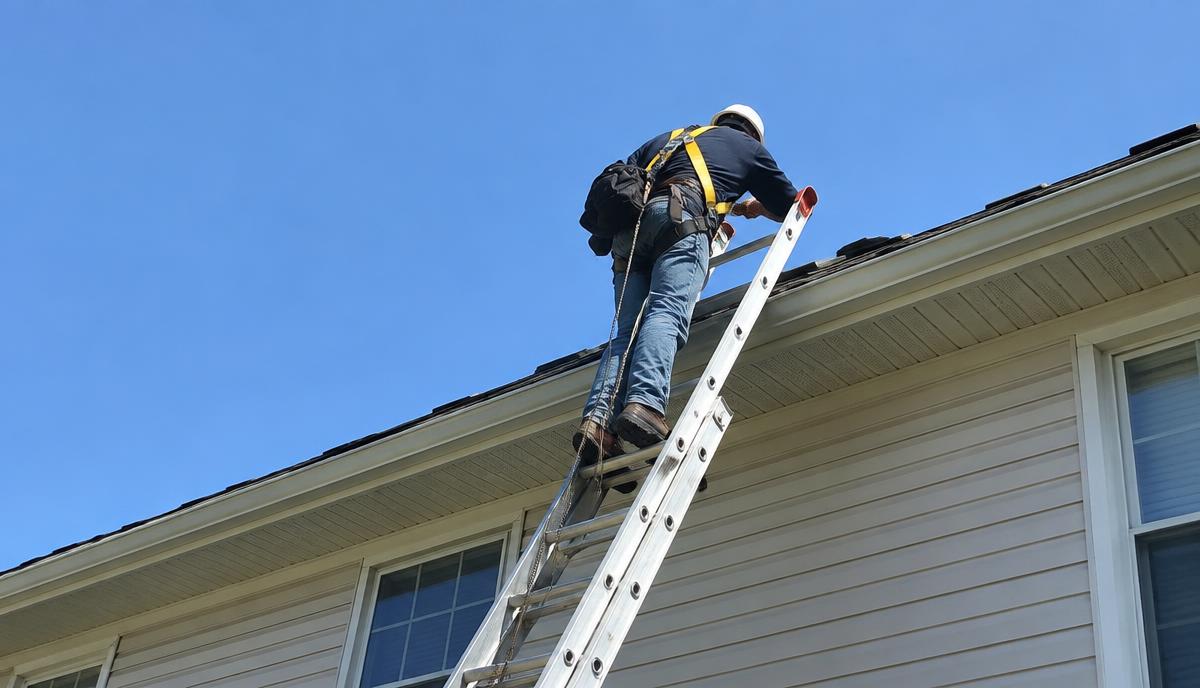
At a second-story gable, the permanent outdoor lighting contractor vs DIY decision starts with safe access, not the price of the lights. A kit may look simple on the driveway. However, holding a straight track while reaching around a soffit return is a different job.
These systems mount along soffits, fascia and rooflines using tracks or mounts. They stay up year-round, with app-driven scenes for holidays and everyday lighting. The best installation makes both the lights and their wiring easy to service.
Permanent Outdoor Lighting Contractor vs DIY: The Trade-Offs
A short, single-story run can suit a capable homeowner. However, steep pitch, brittle trim and awkward power access change the calculation. Here’s the practical permanent outdoor lighting contractor vs DIY comparison.
| Factor | DIY | Professional Crew |
|---|
| Access | You supply ladders and judge safe reach. | Crew plans ladder, scaffold or lift access. |
| Mounting | You choose fasteners and set alignment. | Crew checks backing, spacing and corners. |
| Wiring | You verify every system limit. | Crew plans power, extensions and service access. |
| Warranty | Product coverage may exclude installation damage. | Written workmanship coverage may supplement product coverage. |
| Cost | Lower labor expense, more personal time. | Higher upfront expense, less hands-on work. |
Ladder Work Is Often the Deciding Factor
For permanent outdoor lighting contractor vs DIY, height can outweigh hardware savings. Uneven ground, landscaping and overhead wires complicate ladder placement. Follow the OSHA ladder safety guidance, including proper ladder angle and avoiding overreaching.
Two Details You Notice on a Ladder
First, dry-fit the corner before fastening the straight section. A soffit return can leave too little room for a connector, forcing you to remove finished work.
Second, check the fascia board for sound backing before driving screws. Vinyl J-channel isn't structural support, and tightening against hollow trim can distort it. Keep fasteners clear of the drip edge and its drainage path.
A professional crew should move the ladder instead of leaning sideways for one more screw. Meanwhile, steep roof pitch or a tall gable may require a lift, not a longer reach.
What a Professional Crew Does Differently
The permanent outdoor lighting contractor vs DIY difference often shows in preparation. Good crews test the system on the ground and agree on light placement before drilling.
- Survey: Measure roofline sections, power access and trim condition.
- Mock up: Check light setback and appearance after dark.
- Test: Pair the controller and check every light section.
- Mount: Align tracks, support corners and secure wiring.
- Commission: Test scenes, schedules and the full run under load.
- Hand over: Explain controls, service access and warranty contacts.
Hardware dimensions aren’t universal instructions. If a track specifies 8mm mounting holes or 2.5 inch fastener spacing, verify those details against its instructions and your substrate. Don’t copy another installation’s drilling pattern.
Deliciosa Decor is LightPro Connect’s affiliated hardware partner for mounting tracks and channels. Review mounting hardware options for compatibility, drainage and access to replaceable components.
Wiring: Low Voltage Still Has Limits
In the permanent outdoor lighting contractor vs DIY comparison, wiring deserves its own inspection. Low-voltage run length depends on the exact model, power supply and permitted extensions. Excess length can cause dimming, flicker or unreliable operation.
- Follow limits for total length, light count and unlit extension sections.
- Use approved outdoor connectors and power equipment.
- Leave a small, supported service loop near replaceable controllers.
- Arrange cable entry so water doesn’t follow the wire into connections.
- Use required GFCI protection and test it as instructed.
An IP65 rating doesn't make a component submersible or give every connection the same protection. In addition, low-voltage installation doesn't authorize new line-voltage wiring. Have a qualified electrician handle new outlets or circuits as local rules require; the CPSC explains GFCI protection.
Warranty Coverage: Product Versus Workmanship
The permanent outdoor lighting contractor vs DIY warranty question has two parts. A manufacturer's warranty covers specified product defects. An installer's workmanship warranty covers only the installation issues listed in that agreement.
Ask who pays for troubleshooting, removal, shipping and reinstallation. DIY doesn't automatically void all coverage, but unauthorized cuts, connectors or power supplies may affect a claim. Also confirm coverage for leaks, loose tracks and failed adhesive, plus exclusions and transfer rules.
Cost, Appearance and Resale Value
Budgeting for permanent outdoor lighting contractor vs DIY means counting tools, tracks, access equipment and your time. As broad typical planning ranges, DIY materials can run from several hundred to a few thousand dollars. Professional projects often reach several thousand dollars or more, depending on scope and access.
In Phoenix, sun exposure deserves attention; in Minneapolis, consider snow and ice near eaves. Meanwhile, a tall Atlanta gable may add more labor than a longer, accessible ranch roofline.
Clean tracks and concealed wiring can improve curb appeal, but they don't guarantee a higher sale price or appraisal. Keep receipts, instructions and account-transfer steps for the next owner. Obtain HOA approval where required before drilling.
Finding a Local Installer Without Picking One Brand First
Searching for a “permanent outdoor lighting installer near me” should lead to a scope discussion, not just a product pitch. Ask about insurance, required licenses, similar rooflines, electrical work and written service terms.
LightPro Connect is a nationwide, manufacturer-neutral marketplace with vetted installers covering Govee, Lumary, Eufy, Nanoleaf, Philips Hue Festavia and Enbrighten Eternity. It isn't owned by or affiliated with a lighting manufacturer. Explore supported lighting brands, or see it on your own home and get matched with installers.
FAQ: Planning Your Installation
How much does professional installation cost?
Expect a site-specific quote rather than a dependable per-foot shortcut. Height, corners, track selection, power access and lift rental all affect cost. Ask for separate materials and labor figures where available. Also check whether electrical work, app setup, cleanup and future service visits are included.
Will DIY installation void my warranty?
Not necessarily. Read the exact product warranty before buying or modifying anything. Coverage may depend on approved installation methods and components. Keep receipts and photos of connections. A professional installation also needs a written workmanship warranty because product coverage alone may not pay for labor to replace a failed section.
How long can the lighting run be?
There isn't one safe maximum for every system. Check the model's limits for light count, total length, extensions and power supply capacity. Measure the actual cable route, including corners and jumps. Don't splice in extra lights or add power injection unless the manufacturer expressly supports that method.
Can I control the lights from my phone?
App-driven scenes and schedules are common, but connection requirements vary by model. Check Wi-Fi coverage near the controller before installation. Ask the crew to set up the system in your account, demonstrate basic controls and explain recovery after a power outage. Confirm any subscription or remote-access requirements before purchasing.
Should I hire a contractor, and how long will it take?
The permanent outdoor lighting contractor vs DIY choice favors hiring when access, wiring or mounting exceeds your skills. A straightforward professional installation may take a day; complex rooflines, electrical work or weather can extend it. Ask who will perform the work and request a schedule tied to your actual scope.
How do I compare local quotes?
Match roofline coverage, model, tracks, electrical scope and warranty terms before comparing totals. LightPro Connect lets one request return multiple local quotes, with availability and timing depending on your area. Share photos and rough measurements, then request and compare local installation quotes before committing to equipment or ladder work.