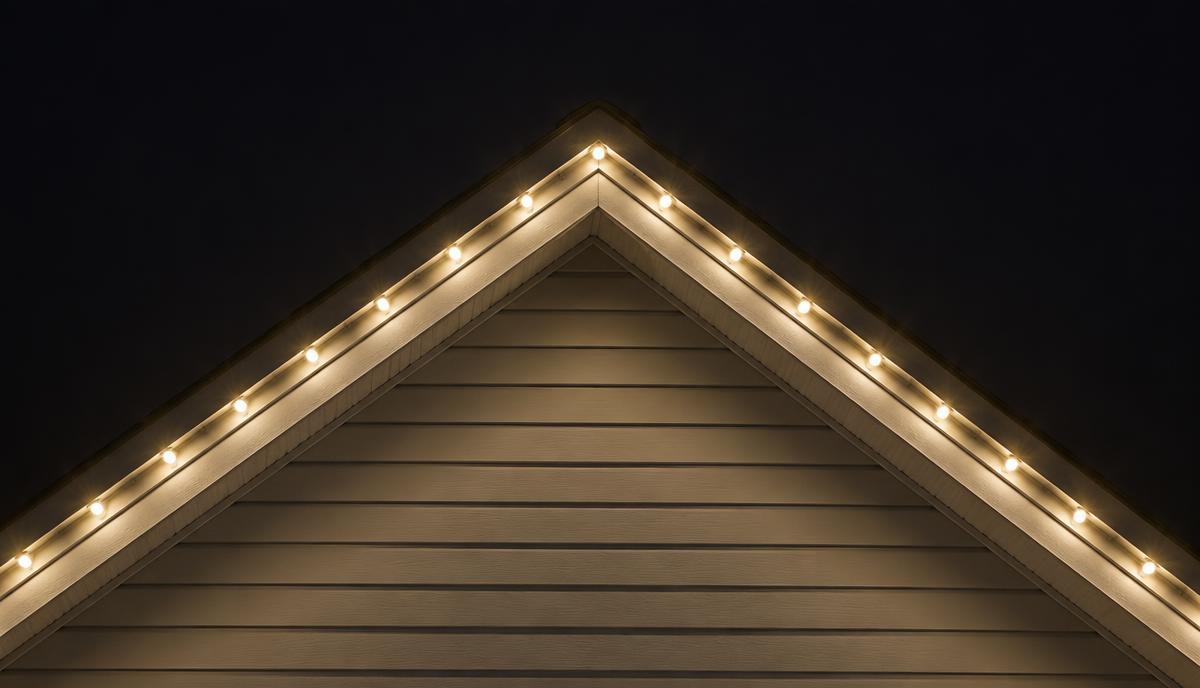
Four-inch and six-inch spacing create different roofline patterns. Learn how roof pitch, wall setback, gable layout, and mounting details affect the finished look.
On a 24-foot roofline, permanent lighting spacing of 4 inches means about 72 light positions, compared with 48 at 6 inches. That difference affects the nighttime pattern, material count, and layout at each corner. However, tighter spacing isn't automatically better.
Permanent outdoor lights mount to soffit, fascia, and rooflines using tracks or mounts. They stay up year-round, with app-driven scenes for everyday use and holidays. The right layout starts with the house, not just a spacing number.
Permanent Lighting Spacing: Compare 4 and 6 Inches
Spacing usually means center-to-center distance between lights. Confirm that definition before comparing quotes, because track hole spacing and actual light spacing aren't always the same.
| Layout Factor | 4-Inch Spacing | 6-Inch Spacing |
|---|
| Approximate lights per 10 feet | 30 | 20 |
| Typical visual effect | Denser pattern with more overlap | More separation between light pools |
| Scene detail | More points for short color segments | Fewer points over the same distance |
| Material demand | 50% more light positions | Fewer light positions |
These counts are planning estimates; endpoint placement changes exact totals. More lights can increase hardware and power requirements. However, permanent lighting spacing alone doesn't determine brightness or installed cost.
Check Whether the Product Supports That Spacing
Many systems use fixed factory spacing. You can't simply compress, stretch, or cut a string to fit a 4-inch or 6-inch track pattern. Confirm approved mounting, cutting, and extension options before ordering channels.
Compare supported permanent lighting brands by exact model. Cable length, beam shape, and controller limits matter more than the brand name alone.
How Roof Pitch Changes the Nighttime Look
Installers use pitch for roof slope, but some product descriptions also use it for light spacing. Put both measurements on the drawing: roof pitch as rise over run, and light spacing in inches.
A 6:12 roof rises 6 inches for every 12 inches horizontally. Its sloped gable edge is about 12% longer than its horizontal projection. Therefore, count lights along the actual rake, not the ground-level width.
Steeper Gables Change the Rhythm
Equal spacing along a steep rake looks tighter horizontally from the street. Meanwhile, angled mounting surfaces can direct beams differently than a level soffit. Ask which direction the light faces before approving the permanent lighting spacing.
Wall Setback Shapes the Scallops
Distance from the wall can change the pattern as much as spacing. Lights close to siding often produce sharper pools; farther away, they may spread and overlap more. Beam design and textured brick also change the result.
Test a short section after dark at the planned brightness. Then see it on your own home to discuss the layout, while treating a visualization as a planning aid rather than a photometric guarantee.
Lay Out Gables From the Peak Outward
A balanced peak usually matters more than squeezing in one extra light. Plan permanent lighting spacing across the whole gable before fastening the first track.
- Measure both rakes. Record the peak, soffit return, corners, and any blocked mounting areas.
- Choose a peak treatment. Center one light at the apex, or place two lights equally below it if the hardware allows.
- Mark outward from the peak. Keep corresponding positions balanced on both slopes.
- Resolve the ends. Use approved track cuts or unlit sections rather than changing factory cable spacing.
- Dry-fit and test. Check corner transitions and cable routes before final fastening.
Ladder tip: Hold a scrap of track against both sides of the peak before cutting full lengths. The visible trim angle may differ from the roof framing angle, especially on older fascia.
Ladder tip: Mark the light centers on painter's tape, then inspect from the driveway. A downspout or deep soffit return can hide a light that looks correctly placed from the ladder.
Mounting Details That Keep the Layout Straight
Track should follow a planned reference line, not every wave in an old fascia board. However, don't bridge unsupported gaps or fasten into loose trim. Repair damaged mounting surfaces first.
- Check hole sizes. A drawing showing 8mm mounting holes must match the intended hardware; that isn't a universal specification.
- Separate fasteners from lights. A 2.5 inch fastener spacing callout describes attachment, not light centers. Follow the track manufacturer's schedule.
- Protect drainage. Keep the drip edge clear and don't block weep paths in J-channel.
- Leave service access. Add a secured service loop where permitted, away from sharp edges and standing water.
Deliciosa Decor is LightPro Connect's affiliated hardware partner for mounting tracks and channels. Review mounting hardware for your roofline with your installer before committing to a layout.
Check Power, Weather Exposure, and Local Conditions
Permanent lighting spacing affects light count, but each system sets its own maximum low-voltage run length. Extensions, controllers, and power supplies must follow the model's instructions. Adding an unsupported power feed isn't a safe workaround.
An IP65 rating describes dust and water-jet protection, not submersion or permission to expose every connection. Confirm ratings for the complete installation. Use required GFCI protection; ESFI explains how GFCIs reduce shock risk.
In Phoenix, check temperature limits on sun-exposed fascia. In Minneapolis, account for ice and snow; in Miami, review wind exposure and corrosion. For operating costs, use actual system wattage and hours, with Department of Energy guidance on LED efficiency as background.
Frequently Asked Questions
Does 4-Inch Spacing Cost More Than 6-Inch Spacing?
It can, because the same length needs 50% more light positions. However, access, track fabrication, power design, and product choice also affect labor and materials. Ask for both layouts on the same measured roofline. Comparing permanent lighting spacing without matching the rest of the scope won't tell you much.
Will Custom Spacing Affect My Warranty?
It may if the work involves unapproved cuts, extensions, or mounts. Ask for the product warranty and the installer's workmanship warranty separately. Have the installer identify who handles failed lights, water intrusion, and service labor. Get any claim about warranty coverage for a modified layout in writing before installation.
How Long Can One Lighting Run Be?
The exact model decides, not a general rule for all permanent lights. Ask the installer to show the permitted light count, total run length, and extension allowance. In addition, have power-supply locations and service access marked on the proposal so future repairs don't require removing long sections of track.
Can I Change Colors and Schedules in the App?
Usually, yes, but controls vary by model. Some systems address individual lights; others group lights into segments. Confirm scheduling, dimming, connectivity, and account requirements before buying. Ask the installer to demonstrate a quiet everyday scene as well as holiday effects using your proposed permanent lighting spacing.
How Do I Find a Qualified Installer Near Me?
LightPro Connect is a nationwide, manufacturer-neutral marketplace with vetted installers covering Govee, Lumary, Eufy, Nanoleaf, Philips Hue Festavia, and Enbrighten Eternity. It isn't owned by or affiliated with a lighting manufacturer. You can get matched with installers; one request returns multiple local quotes for comparison.
How Long Does Installation Take?
A straightforward roofline may take about a day once materials are ready. Tall gables, repairs, electrical work, or difficult access can extend that timeline. Weather and scheduling also affect the start date. Ask for separate estimates for preparation, installation, and app setup, including a nighttime check if offered.
Ready to settle the layout? Compare local installation quotes with your roofline measurements, preferred spacing, and peak treatment included.