Plan your permanent lighting budget with broad hardware and labor ranges, roofline pricing examples, and practical advice on tracks, power, warranties, and installer quotes.
On a 150-foot roofline, Govee lights installation cost can change sharply between a straight, one-story eave and a two-story front with three gables. The lights may be identical, but access, mounting work, and cable routing aren't.
For early planning, allow roughly $1,300 to $4,500 for a straightforward 100- to 150-foot professional installation. Complex 150- to 250-foot projects can reach $3,000 to $8,000 or more. These are broad budgeting ranges, not a national rate survey or a promised quote.
Govee lights installation cost: Hardware versus labor
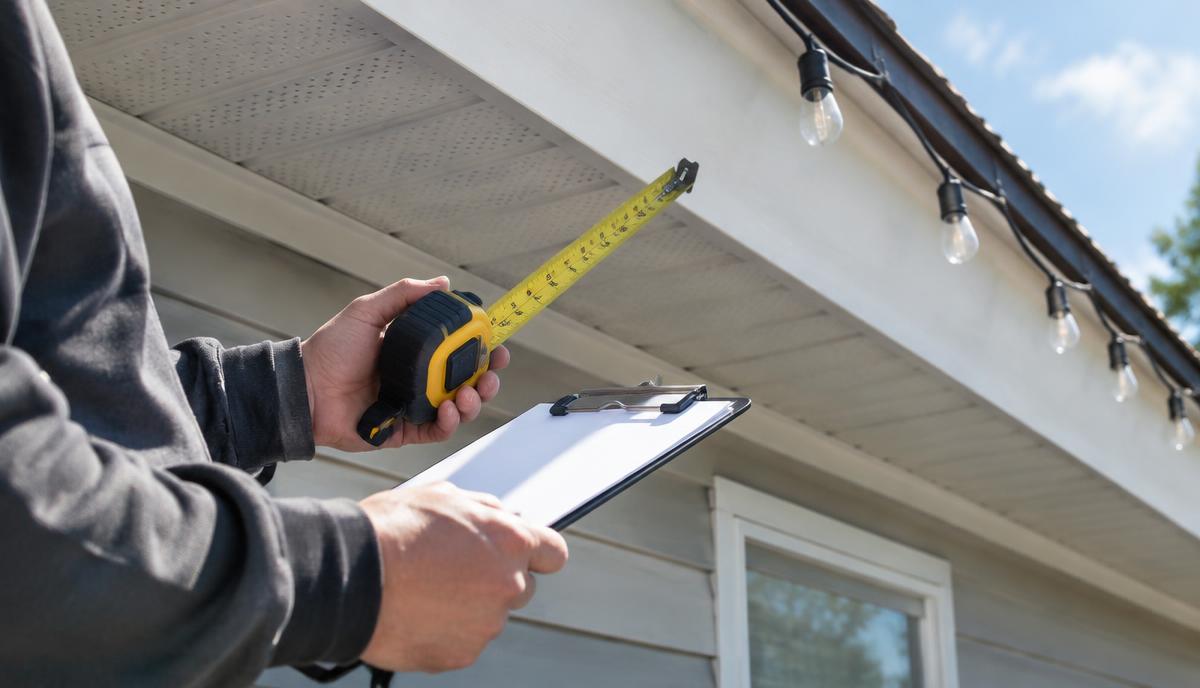
Separate the equipment from the work before comparing bids. A retail kit price doesn't include measuring, drilling, mounting tracks, routing extensions, or setting up app-driven scenes for year-round use.
The following cost comparison gives typical planning allowances. Model, sales, local wages, and the mounting method can move actual pricing outside these ranges.
- Lighting hardware: About $250 to $800 for many 100- to 150-foot kit configurations. Premium models and multiple kits can cost more.
- Basic installation labor: Roughly $5 to $12 per installed linear foot on accessible, one-story runs.
- Complex installation labor: Roughly $12 to $25 or more per foot for tall, broken-up, or difficult-access rooflines.
- Tracks and channels: Allow approximately $2 to $6 per foot for materials, with installation labor identified separately.
- Extensions, mounts, and small supplies: Often $50 to $300, depending on layout and approved accessories.
- Added controller or powered zone: Budget broadly around $150 to $600 or more in hardware per zone; some layouts require another complete kit.
- Lift rental or electrical work: Separate allowances, often several hundred dollars and potentially much more.
Don't add every high number together automatically. Some installers bundle tracks, supplies, and setup into their footage rate; others itemize them.
A 150-foot kit doesn't necessarily cover 150 feet of visible roofline. Unlit crossings, section lengths, and approved extension limits affect the layout. Ask for measured illuminated footage and a separate allowance for transitions.
Realistic totals for a single-family home
Use these examples to put Govee lights installation cost in context. They assume usable existing power and exclude major electrical upgrades or roof repairs.
- 100-foot, one-story front: Approximately $1,000 to $3,000 installed, with simple access and limited transitions.
- 150-foot front and side returns: Approximately $1,800 to $4,500 with mounting channels and a few gables.
- 200-foot, two-story layout: Approximately $3,500 to $7,000 with more ladder moves, cable routing, and mounting labor.
- 250-foot complex layout: Approximately $5,000 to $9,000 or more with tall peaks, difficult access, or multiple powered zones.
A Dallas ranch and a narrow-lot Seattle two-story home need different access plans. Meanwhile, Denver snow exposure and Atlanta's tall front gables can change attachment and equipment needs. City alone doesn't set the price.
What raises or lowers the installation quote
Roof height, pitch, and gables
Height adds ladder moves and may require a lift. Steep pitch can restrict safe roof access, while each gable adds angled cuts and changes in working position. A second-story run above a porch roof is often slower than an equally high, unobstructed wall.
Soffit, fascia, and mounting tracks
A sound wood soffit is easier to work with than brittle vinyl or a damaged fascia board. Tracks give a straighter finish and conceal wiring, but corner cuts and soffit return transitions take time. Don't treat J-channel or the drip edge as structural fastening points.
Installer tip: Test a short section after dark before mounting the whole run. A small change in distance from the wall can shift the light pattern, especially where brick changes to siding.
Deliciosa Decor is LightPro Connect's affiliated hardware partner for mounting tracks and channels. Review mounting hardware options for your exact light model. Details such as 8mm mounting holes or 2.5 inch fastener spacing are product-specific, not universal installation rules.
Controller count and cable routing
Separated wings may need independent controllers and power supplies. However, another controller won't fix an unsupported cable extension. The model's maximum low-voltage run length, approved connectors, and power requirements govern the design.
Installer tip: Leave a small service loop at accessible connections, secure it off sharp edges, and label each controller before closing the channel. That makes troubleshooting easier without pulling down a long finished run.
Power, weather protection, and warranty
Govee lights installation cost can rise if there's no suitable nearby outlet. Have an electrician assess outdoor GFCI protection, weatherproof covers, and any new circuit work. See the CPSC guide to GFCIs for basic protection guidance.
Check each component's outdoor rating. IP65 doesn't mean submersible, and a light string's rating doesn't automatically apply to its controller or adapter. The manufacturer's product documentation should guide placement, extensions, and supported modifications.
Keep the hardware warranty separate from the installer's workmanship coverage. Ask who pays for removal and reinstallation if a covered light fails. Customer-supplied kits may have different service terms.
How to compare local installation quotes
Searching for Govee lights installation cost near me is a starting point, but matching scopes gives you a useful comparison. Follow this checklist:
- Mark the coverage. Separate the front, side returns, peaks, and backyard. Use the visualizer to see it on your own home.
- Confirm the equipment. List model, kit quantities, controllers, extensions, and mounting method.
- Break out the work. Identify labor, tracks, lift charges, electrical allowances, taxes, and cleanup.
- Confirm the handoff. Include app pairing, scene testing, warranty terms, and access for future repairs.
LightPro Connect is a nationwide, manufacturer-neutral marketplace with vetted installers covering Govee, Lumary, Eufy, Nanoleaf, Philips Hue Festavia, and Enbrighten Eternity. It isn't owned by or affiliated with a lighting manufacturer. You can find local installers and submit one request to receive multiple local quotes, subject to installer availability.
FAQ: Govee installation pricing and planning
How much does professional installation cost?
For a straightforward 100- to 150-foot project, budget broadly around $1,300 to $4,500 including hardware and labor. Govee lights installation cost rises with height, tracks, difficult access, and separate powered zones. Confirm what's included before comparing a bundled quote with a labor-only offer.
Does professional installation protect the warranty?
Hiring a professional doesn't automatically expand the manufacturer's warranty. Coverage depends on the model, purchase terms, and installation practices. Ask the installer to follow approved mounting and connection instructions, then get separate written workmanship terms covering attachment failures, service visits, and replacement labor.
How long can one continuous run be?
There's no single maximum for every Govee model. Check the exact kit's supported light length and extension limits before buying. In addition, map unlit crossings between roof sections. A layout within the advertised light footage can still exceed an allowed extension or wiring configuration.
Can I control everything from one app?
Compatible Govee devices generally use Govee Home, but grouping and scene behavior vary by model. Multiple controllers don't always behave like one continuous string. Have the installer demonstrate your planned scenes, schedules, and network connection before finishing, then confirm the devices belong to your account.
Can I hire someone to install lights I already bought?
Many installers accept customer-supplied kits, but others supply only equipment they support. Send the model number, quantities, and photos of your roofline first. Also ask who handles missing parts, returns, and failed components, because those tasks may fall outside the quoted installation labor.
How long does installation take?
A straightforward front roofline may take a day, while taller or more detailed projects can take two days or longer. Weather, lift access, and electrical preparation affect timing. Ask for a work window that includes testing and app setup, not just attaching the lights.
Ready to price your roofline? Compare quotes from local professionals with the same footage, mounting plan, and equipment list.