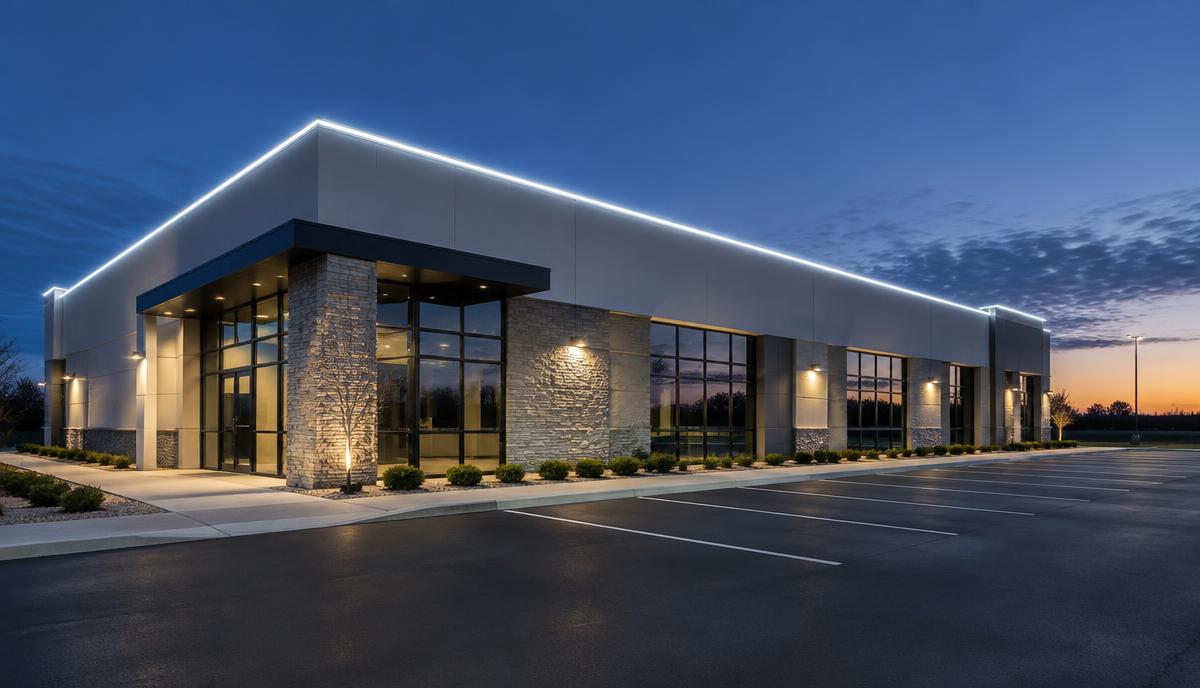
Plan straight roofline runs, safe access, useful brand-color scenes, and a service plan that fits your building and business hours.
A 180-foot storefront can turn a commercial permanent lighting installation into a headache if the crew starts before checking power, lift access, and closing time. The lights are only part of the job. Straight tracks, protected wiring, and reachable service points make the system easier to live with.
Permanent outdoor lighting mounts along soffit, fascia, and rooflines using tracks or mounts. It stays up year-round, with app-driven scenes for everyday use and special events. On commercial buildings, the plan also needs to protect customers, roofing, and business operations.
Survey the Building Before Ordering
Start your commercial permanent lighting installation with a measured site walk, not a satellite estimate alone. Record each straight section, corner, entrance, and power location. In addition, check landlord approval, sign rules, permit requirements, and local limits on light spill.
- Measure roofline sections, parapet heights, gable pitch, and soffit return depth.
- Inspect the fascia board and mounting surfaces for rot, loose trim, or damaged coatings.
- Locate approved power sources and confirm circuit capacity and required GFCI protection with a qualified electrician.
- Mark lift positions, pedestrian barriers, delivery routes, and service access.
- Confirm product suitability, controller locations, network coverage, and maintenance access.
A Phoenix storefront may need extra attention to heat exposure. Meanwhile, a Minneapolis property needs a plan for snow and ice near roof edges. These conditions affect product selection and placement, not just the work date.
Commercial Permanent Lighting Installation on Parapets
Parapets often hide the roof, but they don't automatically provide a safe mounting surface. Avoid drilling through coping, roof membranes, or flashing without an approved detail. Consult the roofer and resources from the National Roofing Contractors Association before disturbing roof-edge assemblies.
Make Long Runs Look Straight
A long track follows every dip if you simply press it against uneven trim. Establish a reference line, then inspect it from the parking lot before fastening the full run. Keep the drip edge clear so water can leave the roof normally.
Installer tip: Tack the first and last track sections in place, then sight along their lower edges from the lift. Small changes in alignment become obvious from that angle, even when they disappear from directly below.
Use fasteners suited to the substrate and follow the track manufacturer's instructions. Treat details such as 8mm mounting holes or 2.5 inch fastener spacing as product-specific requirements, not universal rules. Leave specified expansion gaps, and don't use thin J-channel as structural backing.
Plan Power and Service Points
Long straight runs need more than extra light segments. Check the maximum low-voltage run length, extension limits, and controller capacity for the exact model. If the design exceeds those limits, use approved separate powered sections rather than improvised splices or power injection.
Installer tip: Leave a labeled service loop where connectors remain accessible, without creating an exposed pocket that holds water. Photograph those locations before closing the channel. As a result, a later repair won't require opening every section.
IP65 does not mean a component can sit in standing water, and a light's rating may not cover its power supply. Check outdoor-use listings and installation instructions; UL's lighting safety resources explain the role of safety testing and certification.
Compare Mounting and Access Options
The best commercial permanent lighting installation balances appearance with repair access. Ask bidders to explain these trade-offs rather than quote footage alone.
- Under-soffit mounting: Offers some weather shelter and often useful wall wash. However, shallow soffits and return corners can limit placement.
- Fascia mounting: Can create a clear outline visible from the road. It also exposes alignment errors and may require repairs to the fascia board first.
- Parapet-face mounting: Suits many flat-roof storefronts. However, fastening and cable routing must protect flashing and keep service points reachable.
- Lift access: Helps on high, long runs but needs parking space and barriers. Ladder access needs suitable footing and still requires a protected work zone.
Deliciosa Decor is LightPro Connect's affiliated hardware partner for mounting tracks and channels. Review mounting hardware options with your installer to confirm fit, finish, and fastening requirements.
Schedule Around Customers and Staff
Split a commercial permanent lighting installation into survey, preparation, mounting, commissioning, and handoff. A small storefront might take a day or two on site; larger buildings can require several days or phased visits. Weather, permits, electrical work, and lift availability can extend the calendar.
Schedule overhead work outside busy periods, but check local noise rules before booking an early start. Keep exits and accessible routes open. For an Atlanta restaurant or Dallas retail center, delivery windows may matter as much as opening hours.
Ask the quote to separate after-hours labor, lift rental, electrical work, and surface repairs. Otherwise, two similar totals may cover very different jobs.
Build Brand Scenes Staff Can Use
Plan commercial permanent lighting installation scenes around daily operations first. Save a restrained everyday scene, a brand-color scene, a holiday scene, and an off schedule. Test colors after dark because wall paint and viewing distance change how they look.
Exact brand-color matching isn't always possible, especially across different products. In addition, avoid flashing near roads or neighboring windows. Preview placement through the visualizer to see it on your own home or explore your property's layout, then confirm the effect on site.
Use a business-controlled account rather than an employee's personal login. Document administrator access, schedules, and recovery steps. Confirm what happens after a power outage or internet loss before handoff.
Put Maintenance in Writing
A commercial permanent lighting installation needs a service plan, even with long-life LEDs. Request scheduled checks of tracks, fasteners, connectors, drainage, and failed segments. Also define troubleshooting charges, lift costs, response targets, and who keeps compatible spare parts.
Separate the product warranty from workmanship coverage. Neither automatically includes access equipment or damage from storms, roof work, and unauthorized changes.
Frequently Asked Questions
How Much Does Permanent Outdoor Lighting Cost?
Commercial projects typically range from several thousand dollars for a straightforward storefront to tens of thousands for larger or harder-to-access buildings. Footage alone won't establish the price. Height, power work, mounting condition, equipment, and after-hours labor all matter. Ask for an itemized scope with exclusions before comparing totals.
What Warranty Should I Ask For?
Ask for the manufacturer's written product warranty and the installer's separate workmanship warranty. Confirm who diagnoses failures and whether labor, shipping, replacement parts, and lift rental are covered. Also ask how claims work if a model is discontinued. A maintenance agreement is useful, but it isn't a substitute for warranty terms.
How Long Can One Lighting Run Be?
There isn't one safe maximum for every system. Limits depend on the model, power supply, controller, extensions, and approved layout. Have the installer show the manufacturer's limits against your measured plan. Long parapets may need multiple powered sections, and coordinated scenes across them should be tested before final acceptance.
Can I Control the Lights From My Phone?
App-driven control is common, but scheduling, remote access, account sharing, and network requirements vary by model. Ask for a demonstration using your business network. Staff should know how to select approved scenes without changing system settings. Keep account ownership with the business and document a practical fallback if connectivity fails.
How Do I Hire an Installer Near Me?
For a commercial permanent lighting installation near me search, compare relevant project experience, insurance, electrical scope, and service access. LightPro Connect is a nationwide, manufacturer-neutral marketplace with vetted installers covering Govee, Lumary, Eufy, Nanoleaf, Philips Hue Festavia, and Enbrighten Eternity. Explore the supported lighting brands; availability varies locally.
How Far Ahead Should I Book?
Start before your intended launch date, especially before holiday demand. Ask each bidder to distinguish estimated booking time from actual days on site. Roof repairs, permits, electrical upgrades, and landlord approval can delay the start. Agree on a weather backup window and identify which work must happen while the business is closed.
Ready to plan your project? Compare quotes from local installers through LightPro Connect. One request returns multiple local quotes, with availability depending on your location and project.